What Is the Difference Between OTC and Prescription Hearing Aids?
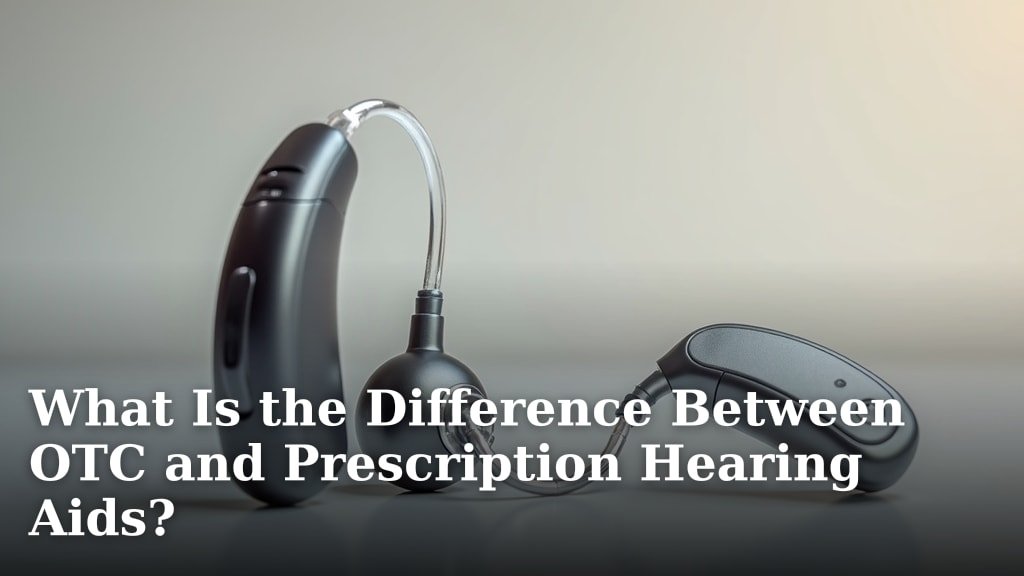
The main difference between OTC and prescription hearing aids is how you get them and who fits them. You can buy OTC (Over-The-Counter) hearing aids directly from stores or online without seeing a doctor. Prescription hearing aids require a visit to an audiologist for a professional fitting and programming.
We found that OTC devices are for mild to moderate hearing loss, offering a more affordable and accessible option. Prescription hearing aids handle all levels of hearing loss, from mild to profound, and are custom-tailored to your specific needs by a hearing professional.
- OTC hearing aids are for mild to moderate loss.
- Prescription aids are for all levels of loss.
- You buy OTC aids directly, without a doctor.
- Prescription aids require a professional fitting.
- Cost and customization differ greatly.
Ready to understand which option might be right for your ears? Let’s dive into the details and help you make an informed choice.
Understanding the Core Differences Between OTC and Prescription Hearing Aids
You’re wondering about the big picture, right? The core differences between over-the-counter (OTC) and prescription hearing aids really boil down to how they’re regulated, purchased, and customized for you. We found that these distinctions shape your entire experience, from cost to effectiveness.
The journey you take to acquire each type of device is perhaps the most defining characteristic. One offers immediate access, while the other requires a more guided approach with a professional.
OTC Hearing Aids: Accessibility and Convenience
Think of OTC hearing aids like reading glasses. You can buy them directly off the shelf, often without a formal diagnosis or a visit to a doctor. This direct-to-consumer model is a game-changer for many.
The goal of OTC devices is to make hearing solutions more accessible and affordable. You can find them in pharmacies, big-box stores, or online. This convenience factor is a huge draw, especially if you’re just starting to notice changes in your hearing.
Who Are OTC Hearing Aids For?
We found that OTC hearing aids are specifically designed for adults aged 18 and older who perceive their hearing loss as mild to moderate. This is a key distinction. If you often miss parts of conversations in noisy environments, or struggle to hear soft sounds, an OTC device might be a good starting point.
They are not intended for individuals with severe or profound hearing loss. For those situations, a different solution is needed. It’s important to be honest with yourself about your hearing level (National Institute on Deafness and Other Communication Disorders).
Features and Customization of OTC Devices
While OTC hearing aids offer convenience, their customization options are generally more limited. Many come with preset programs or simple volume controls that you can adjust yourself. Some might have an accompanying app for minor adjustments, but they won’t be tailored by a professional.
You’ll typically find features like noise reduction and feedback suppression. However, the level of sophistication and personalized tuning won’t match a prescription device. Think of it as a “one-size-fits-most” approach, rather than a bespoke suit.
Prescription Hearing Aids: Professional Care and Tailored Solutions
Now, let’s talk about prescription hearing aids. These devices are the result of a more involved process, guided by hearing care professionals like audiologists. This path is all about precision and personalized care.
When you opt for prescription aids, you’re not just buying a device; you’re investing in a comprehensive service that includes testing, fitting, and ongoing support. It’s a partnership to manage your hearing health.
Who Needs Prescription Hearing Aids?
Prescription hearing aids are suitable for all degrees of hearing loss, from mild to profound. If you have significant difficulty understanding speech, particularly in challenging environments, or if your hearing loss is affecting your quality of life, this is likely the route for you.
They are also necessary for individuals with certain medical conditions affecting their ears or those under 18 years old. A hearing professional can assess your unique situation and recommend the best course of action (American Speech-Language-Hearing Association).
The Fitting and Programming Process
This is where prescription hearing aids truly shine. Your journey begins with a thorough hearing evaluation performed by an audiologist. They’ll assess the specific nature and degree of your hearing loss, creating an “audiogram” – a map of your hearing abilities.
Based on this detailed assessment, the audiologist will then select and program the hearing aids precisely for your ears and your individual needs. They consider the shape of your ear canal, your lifestyle, and your communication goals. This level of personalized fitting ensures optimal performance and comfort.
- Comprehensive hearing tests are performed.
- Hearing aids are chosen based on your unique audiogram.
- Devices are programmed to your exact hearing loss.
- Follow-up appointments ensure proper adjustments.
- Ongoing support and maintenance are provided.
Cost Comparison: What to Expect Financially
We know that cost is a major factor for many of you. Generally, OTC hearing aids are more affordable upfront. You’re paying for the device itself, without the added cost of professional services. Prices can range widely, but they are typically less than prescription options.
Prescription hearing aids, while often more expensive initially, include the cost of professional services. This covers the audiologist’s expertise, testing, fitting, adjustments, and ongoing support. Think of it as a bundled service, not just a product.
It’s worth exploring if your insurance covers any part of either type of device. Sometimes, health plans might offer benefits for hearing evaluations or even a portion of prescription hearing aid costs. Always check with your provider.
Regulation and Safety Standards
The regulatory landscape for these two types of hearing aids is also quite different. The FDA (Food and Drug Administration) oversees both, but with varying levels of scrutiny and requirements.
OTC hearing aids have specific FDA guidelines to ensure they are safe and effective for their intended use (mild to moderate hearing loss). These regulations focus on making these devices accessible while maintaining certain performance and safety standards.
Prescription hearing aids have been regulated by the FDA for many years as medical devices. This means they adhere to stringent manufacturing and performance standards, and their distribution is controlled through licensed professionals.
Making the Right Choice: Your Personal Hearing Journey
So, how do you decide which path is right for you? It really comes down to the severity of your hearing loss, your comfort level with technology, and your preference for professional guidance.
If you’re noticing just a slight drop in hearing and prefer a budget-friendly, hands-on approach, OTC might be a good starting point. If your hearing loss is more significant, or you want the assurance of expert care and a perfectly tailored solution, prescription aids are usually the better choice.
Many experts recommend a hearing check with a professional regardless of which type you’re considering. Why? Because an audiologist can rule out underlying medical conditions and accurately assess your hearing levels (Mayo Clinic).
A Quick Comparison Table
To help you visualize the key differences, here’s a table summarizing what we’ve discussed:
| Feature | OTC Hearing Aids | Prescription Hearing Aids |
|---|---|---|
| Intended Use | Adults with perceived mild to moderate hearing loss. | All degrees of hearing loss (mild to profound) for all ages. |
| Availability | Directly from stores, pharmacies, online. No prescription needed. | Requires a professional hearing evaluation and fitting by an audiologist. |
| Professional Involvement | Minimal to none. Self-fitting and adjustment. | Full involvement of a licensed hearing professional (audiologist). |
| Customization | Limited adjustments (e.g., volume, pre-set programs). | Custom-fitted and precisely programmed to your unique hearing loss. |
| Cost | Generally lower upfront cost. | Higher initial cost, includes professional services and follow-ups. |
| Follow-up Care | Typically self-managed. | Included professional adjustments, maintenance, and support. |
When to See a Doctor Before Buying Any Hearing Aid
While OTC options offer convenience, there are certain situations where we strongly advise you to consult a doctor or hearing professional first. Don’t skip this step if any of these apply to you:
- You experience sudden hearing loss in one or both ears.
- You have pain or discomfort in your ear.
- You notice fluid, pus, or blood coming from your ear.
- You have a feeling of fullness or pressure in your ear.
- You experience dizziness or vertigo along with hearing loss.
- You suspect a foreign object or earwax blockage is causing your hearing issues.
These symptoms could indicate a medical condition that needs professional attention before any hearing aid can effectively help you. Your ear health is paramount.
Conclusion
You’ve now explored the essential distinctions between OTC and prescription hearing aids. We’ve found that your choice hinges on your specific hearing loss severity and your preference for professional support. OTC options offer accessibility for mild to moderate loss, while prescription aids provide tailored solutions for all levels, backed by expert care.
Understanding these differences helps you navigate your path to better hearing. We encourage you to prioritize your ear health. Always consider a professional hearing check to accurately assess your needs and guide you toward the best hearing solution.
Frequently Asked Questions
Can I upgrade from an OTC hearing aid to a prescription one later?
Yes, absolutely. If an OTC hearing aid doesn’t meet your needs as your hearing loss progresses, you can always consult an audiologist. They can then recommend and fit a prescription device tailored to your evolving requirements.
Do OTC hearing aids require a smartphone to operate?
Not all OTC hearing aids require a smartphone. Some models feature physical buttons for basic adjustments. However, many advanced OTC devices do offer smartphone app connectivity for more refined control and personalization.
Are there any risks associated with using OTC hearing aids without a professional assessment?
Using OTC hearing aids without a professional assessment carries a risk of misdiagnosing your hearing loss. You might overlook underlying medical conditions that require treatment. It could also lead to an ill-fitting device that doesn’t effectively improve your hearing.
How long do prescription hearing aids typically last compared to OTC ones?
The lifespan of both types of hearing aids varies based on quality, care, and usage. However, prescription hearing aids often come with more robust build quality and professional maintenance support, which can contribute to a longer service life.
Will my health insurance cover either type of hearing aid?
Coverage for hearing aids varies significantly by insurance plan and state. Some policies may cover a portion of prescription hearing aid costs or offer discounts. OTC hearing aids are typically not covered by health insurance, though you can often use FSA/HSA funds.