9 Best Hearing Aids Without Bluetooth (October 2026)
The best hearing aids without Bluetooth include the ZHANZHSQL Hearing Aids for Seniors & Adults for five-step volume control, the JMTO Rechargeable Hearing Amplifiers for Adults for a physical volume dial, and the Flaygo Rechargeable Hearing Aid for Seniors for automatic operation.
On this page (5 sections)
The best hearing aids without Bluetooth include models with clear no-wireless claims and simple controls. Karthus and Ceretone are the clearest fits because they state they have no Bluetooth, while other picks need a connectivity check before you decide.
A no-Bluetooth preference can mean avoiding phone pairing, streaming, or wireless radio functions altogether. If you want an in-ear style with wireless audio, compare in-ear hearing aids with Bluetooth.
Check each model’s stated connectivity, since an app or charging case alone does not tell you whether Bluetooth is present.
Our picks at a glance
-
1
 Best for five-step volume control
ZHANZHSQL Hearing Aids for Seniors & Adults
9.7/10 our score
See it on Amazon -
2
 Best for a physical volume dial
JMTO Rechargeable Hearing Amplifiers for Adults
9.4/10 our score
See it on Amazon -
3
 Best for automatic operation
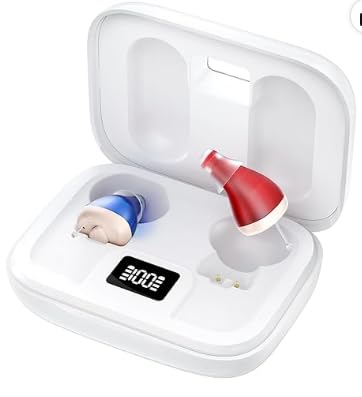
Flaygo Rechargeable Hearing Aid for Seniors
9.3/10 our score
See it on Amazon
- 4
 Check it
Karthus OTC Hearing Aids for Seniors
Best for confirmed no-wireless use - 5
 Check it
Ceretone Horizon OTC Hearing Aids for Seniors
Best for several listening programs - 6
 Check it
Yunwizecho Hearing Aids for Seniors
Best for three listening modes - 7
 Best for behind-the-ear fitCheck it
- 8
 Check it
Oction Touchscreen Hearing Aids
Best for buyers who may want Bluetooth - 9
 Check it
Cearvol Nano 2 OTC Hearing Aids
Best for app-based personalization without streaming
Which hearing aids without Bluetooth are the clearest matches?
Karthus and Ceretone are the clearest choices because they explicitly state that they do not have Bluetooth. For other models, confirm their connectivity before buying if no Bluetooth is essential.
ZHANZHSQL Hearing Aids for Seniors & Adults: Best for five-step volume control
- Five volume levels
- Volume memory
- Rechargeable with a charging case
- LED battery display
Five volume levels and volume memory offer straightforward adjustment without relying on a phone. The charging case and LED display make it easier to keep track of power.
Pros
- Five volume levels
- Remembers the last volume setting
- Charging case has an LED battery display
Cons
- In-ear fit may not suit everyone
- Bluetooth support is not specified
ZHANZHSQL is a practical fit if you want a small set of direct controls. Five volume levels are adjusted with plus and minus buttons, and the device remembers your last volume setting.
The brand describes a rechargeable in-ear design with up to 25 hours of use on one charge. For more compact rechargeable options, see small rechargeable hearing aids.
Its charging case provides 3 to 4 full charges, with an LED display to check battery level.
Bluetooth support is not specified. Confirm connectivity if avoiding wireless connections is essential.
For more options across digital styles, see Best Digital Hearing Aids.
JMTO Rechargeable Hearing Amplifiers for Adults: Best for a physical volume dial
- Physical volume dial
- Automatic power on and off
- Digital battery display
- Interchangeable ear fit
A physical dial offers direct level adjustment, and the devices turn on when removed from their case. Bluetooth support is not specified, so confirm connectivity if its absence is essential.
Pros
- Physical volume dial
- Automatic case-based power operation
- Case displays battery status
Cons
- Bluetooth support is not specified
- Devices are not waterproof
JMTO uses a physical volume dial, so you can adjust the listening level directly. It automatically turns on when removed from the charging case and turns off when returned.
The case shows the battery status of both devices and the case itself. The devices are interchangeable between ears, and multiple earplug options are included to help find a fit.
Bluetooth support is not specified. Confirm connectivity if you require a no-Bluetooth device.
Flaygo Rechargeable Hearing Aid for Seniors: Best for automatic operation
- Automatic on and off
- Noise reduction chip
- Portable charging case
- In-ear design
Automatic operation can reduce daily button presses, while the charging case adds portable power. Bluetooth support is not specified, so confirm connectivity if you want a no-Bluetooth setup.
Pros
- Automatic on and off
- Portable charging case with digital power display
- Compact in-ear design
Cons
- Bluetooth support is not specified
- Manual volume control is not described
Flaygo is for buyers who prefer automatic operation and a compact in-ear shape. The brand says it turns on and off automatically after placement, so there is no mode switch to manage.
Its charging case has a digital power display, and Flaygo states up to 16 hours of use per charge. Bluetooth support is not specified, so confirm connectivity if you want a no-Bluetooth device.
Karthus OTC Hearing Aids for Seniors: Best for confirmed no-wireless use
- No app or Bluetooth
- One-button volume control
- Two listening modes
- Behind-the-ear fit
Karthus explicitly has no app, Bluetooth or wireless function. Its one-button operation and two modes make it a clear choice for buyers who want a self-contained device.
Pros
- No app or wireless function
- One-button control
- Two modes for different environments
Cons
- Intended for mild to moderate hearing loss
- Behind-the-ear style may not be your preferred fit
Karthus is the strongest match for buyers who want a clearly stated no-wireless design. It has no app, Bluetooth or wireless function, plus one-button volume adjustment and two listening modes.
The behind-the-ear design has soft tulip ear tips. Karthus states up to 30 hours of use on one charge and up to 100 hours with the charging case.
The product is intended for mild to moderate hearing loss. If you're unsure whether an OTC device suits your needs, read [Who Should NOT Use OTC Hearing Aids?
(Safety Guide)](/who-should-not-use-otc-hearing-aids/).
Ceretone Horizon OTC Hearing Aids for Seniors: Best for several listening programs
- No Bluetooth
- Four listening programs
- Six volume levels
- Rechargeable case
Ceretone identifies this model as having no Bluetooth. Four programs and six volume levels provide options for buyers who want more adjustments without phone connectivity.
Pros
- No Bluetooth
- Four listening programs
- Four ear tip sizes
Cons
- Up to 16 hours of use per charge
- Behind-the-ear RIC fit may take adjustment
Ceretone Horizon offers four listening programs and six volume levels without Bluetooth. The programs are Indoor, Outdoor, Music and Restaurant, selected with a 3-second long press.
The behind-the-ear RIC design includes four ear tip sizes and left/right markings. Ceretone states up to 16 hours of listening per charge, with a case that provides backup power.
This model suits buyers who want several adjustments without Bluetooth phone connectivity. Those who need a phone connection may prefer Best Hearing Aids For Android instead.
Yunwizecho Hearing Aids for Seniors: Best for three listening modes
- Three listening modes
- Five volume levels
- Automatic on and off
- Rechargeable magnetic case
Three modes and five volume levels give you controls on the device itself. Bluetooth support is not specified, so check connectivity if avoiding wireless phone links is a firm requirement.
Pros
- Three listening modes
- Five volume levels
- Automatic on and off
Cons
- Bluetooth support is not specified
- Fit type is not clearly described
Yunwizecho provides three modes and five volume levels with automatic power operation. Its magnetic case uses USB-C charging.
Bluetooth support is not specified. Confirm connectivity before buying if avoiding wireless phone connections is essential.
RUYIOER OTC Hearing Aids: Best for behind-the-ear fit
- Behind-the-ear design
- Three adjustable modes
- One-touch controls
- Rechargeable
A behind-the-ear shape, one-touch controls and three modes suit buyers who prefer an adjustable device. Bluetooth support is not specified, so confirm it if you require no wireless connectivity.
Pros
- Behind-the-ear fit
- Three adjustable modes
- Volume control
Cons
- Bluetooth support is not specified
- USB charging is described
RUYIOER has a behind-the-ear fit with one-touch controls, three modes and volume adjustment. The brand describes up to 48 hours of continuous use after charging.
Bluetooth support is not specified. Confirm connectivity if you require no wireless connection, and consider whether the behind-the-ear style suits your fit preference.
Oction Touchscreen Hearing Aids: Best for buyers who may want Bluetooth
- Bluetooth connectivity
- Touchscreen control
- Four hearing modes
- Separate ear volume adjustment
Oction has Bluetooth, so it does not meet a strict no-Bluetooth requirement. It offers a comparison for readers who may want phone calls or audio streaming.
Pros
- Touchscreen adjusts each ear
- Four hearing modes
- Bluetooth supports calls and streaming
Cons
- Does not meet a no-Bluetooth preference
- More features may add control steps
Oction is included as a comparison, not as a no-Bluetooth pick. It explicitly includes Bluetooth, with a touchscreen for changing volume, hearing modes and battery status.
Bluetooth supports calls and audio streaming from compatible phones. If you want to compare connected models, see Best Bluetooth Hearing Aids.
Cearvol Nano 2 OTC Hearing Aids: Best for app-based personalization without streaming
- No music or phone-call streaming
- App-based hearing check
- Case controls
- Five hearing modes
Nano 2 does not stream music or phone calls, but it uses an app for hearing personalization. Confirm its wireless behavior if you want no Bluetooth at all.
Pros
- Does not stream music or calls
- Daily controls available from the case
- Five hearing modes
Cons
- App needed for My Fit personalization
- Bluetooth-free status is not specified
Cearvol Nano 2 does not support music streaming or phone calls, but that does not mean it is Bluetooth-free. It uses an app for a hearing check and My Fit personalization, so confirm its wireless behavior if you want no Bluetooth.
After setup, its charging case can control daily volume, programs and listening modes. For a medical professional’s perspective on device choice, see best hearing aids for doctors.
What should you check before choosing a no-Bluetooth model?
First, confirm whether the device has Bluetooth, an app, or another wireless feature. A model that does not stream calls may still use a phone app or wireless connection for setup.
Next, choose controls you can use comfortably. Physical dials, buttons and automatic case operation each offer a different daily routine, while extra programs can help you adjust to different listening settings.
Fit matters too. In-ear devices sit in the ear canal, while behind-the-ear and RIC styles place part of the device behind the ear.
For another fit style, compare open-fit hearing aids.
Compare BTE vs. ITE hearing aids to understand the fit differences.
If you wear glasses or find small controls difficult, compare the shape and adjustment method before deciding. For small ear canals, see how to choose hearing aids for small ear canals.
Do no-Bluetooth hearing aids work for TV and conversations?
They can amplify nearby speech and sound without connecting to a phone, but direct TV audio needs a stated TV connection or compatible accessory. Karthus is described for TV and daily conversations, but direct TV audio connection is not specified.
For a dedicated television setup, compare a TV listening guide with the device’s connection options. If you need calls or music from a phone, a connected hearing aid guide may be more suitable.
How did we choose these hearing aids without Bluetooth?
We compared the stated controls, fit, charging details and connectivity against the needs of shoppers seeking hearing aids without wireless phone connectivity. Models with explicit no-Bluetooth details are distinguished from those whose wireless status needs confirmation.
Our score weighs specs, features and buyer feedback against what you’re shopping for. A high score does not replace a hearing evaluation or confirm that an OTC device is right for your hearing needs.
Which no-Bluetooth hearing aid should you choose?
Choose Karthus if a clearly stated lack of Bluetooth and one-button control matter most. Choose Ceretone if you want multiple listening programs without Bluetooth, or ZHANZHSQL if five volume levels and a battery display are your priorities.
Confirm connectivity before buying any model whose wireless status is unclear. For connected BTE options, compare the best BTE hearing aids with Bluetooth.
For connected alternatives, compare OTC hearing aids with Bluetooth.
If you need phone audio, compare connected options and make sure their features match how you plan to use them.
Our top 3 picks at a glance
-
1
Best for five-step volume control
ZHANZHSQL Hearing Aids for Seniors & Adults
9.7/10 our score
See it on Amazon -
2
Best for a physical volume dial
JMTO Rechargeable Hearing Amplifiers for Adults
9.4/10 our score
See it on Amazon -
3
Best for automatic operation
Flaygo Rechargeable Hearing Aid for Seniors
9.3/10 our score
See it on Amazon
Frequently asked questions
Are there hearing aids that are not Bluetooth?
Yes. Karthus explicitly states that it has no Bluetooth or wireless function, and Ceretone identifies its Horizon model as having no Bluetooth.
This may suit you if you want hearing support without connecting the devices to a phone.
For other models, confirm connectivity before buying.
Can hearing aids without Bluetooth still be rechargeable?
Yes. Karthus and Ceretone are rechargeable options that state they do not have Bluetooth.
Charging and Bluetooth are separate features, so check each model's connection details and power routine.
A battery display or automatic case operation may also make daily use simpler.
Can hearing aids without Bluetooth connect directly to a TV?
Not based on the details for the models here. Karthus is described for TV listening, but direct TV audio connection is not stated.
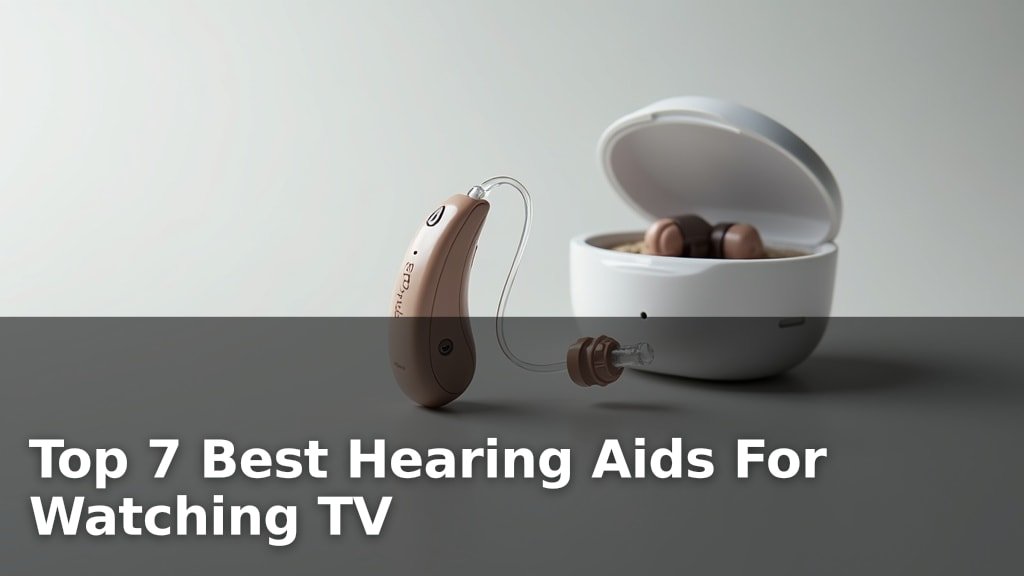
For everyday television listening, consider the Top 7 Best Hearing Aids For Watching TV and check whether a separate TV listening device fits your setup.
Are hearing amplifiers the same as OTC hearing aids?
No. Hearing amplifiers make sounds louder, while OTC hearing aids are regulated medical devices for adults with perceived mild to moderate hearing loss.
Product names alone may not make the distinction clear.
Talk with a hearing professional if you are unsure what type of device fits your needs.