7 Best Bluetooth Microphones for Hearing Aids (October 2026)
The best Bluetooth microphones and remote microphones for hearing aids include the Neosonic [Upgraded] Rechargeable Hearing Aid Amplifier for conversation across a room, the IROGER Hearing Amplifier for Seniors for simple local listening, and the WinBridge Voice Amplifier with Bluetooth for amplifying a speaker to a group.
On this page (6 sections)
- How we compared Bluetooth microphones for hearing aids
- Best Bluetooth microphones and remote listening systems
- What should you check before buying a Bluetooth microphone for hearing aids?
- Which microphone setup suits your listening needs?
- Are Bluetooth microphones and remote microphones the same?
- Which Bluetooth microphone setup should you choose?
The best Bluetooth microphones for hearing aids depend on your hearing aid model and listening setup. These picks include remote-mic amplifiers, personal listening systems, hearing aids with built-in microphones, and voice amplifiers for speakers.
Most are not Bluetooth microphones that connect directly to hearing aids.
If you want a microphone to send a speaker's voice into your hearing aids, first check the hearing aid maker's accessory list and model compatibility. For a broader overview of devices that help you hear speech in specific settings, see What Is an Assistive Listening Device?.
Our picks at a glance
-
1
 Best for conversation across a room
Neosonic [Upgraded] Rechargeable Hearing Aid Amplifier
9.7/10 our score
See it on Amazon -
2
 Best for simple local listening
IROGER Hearing Amplifier for Seniors
9.5/10 our score
See it on Amazon -
3
 Best for amplifying a speaker to a group
WinBridge Voice Amplifier with Bluetooth
9.6/10 our score
See it on Amazon
- 4
 Check it
Ceretone Horizon OTC Hearing Aids for Seniors
Best for an OTC hearing aid with dual mics - 5
 Check it
Trihear Convo Hearing Amplifier for Seniors
Best for conversation and TV switching - 6
 Check it
ConvoAssist™ Personal Sound Amplifier
Best for following two speakers - 7
 Check it
ResponseBridge Voice Amplifier Wireless Microphone Headset B002
Best for portable speaking and presentations
How we compared Bluetooth microphones for hearing aids
These options differ in their microphone setup, intended listener, compatibility information, and listening accessories. The scores reflect how well each option fits the search for a microphone to help hear another person.
A Bluetooth microphone for hearing aids typically needs to be designed to pair with a compatible hearing aid or its streamer. For listening through headphones instead, compare headsets for hearing aid users.
A microphone that uses its own wireless link to a receiver, headphones, or speaker may help with listening, but that does not make it compatible with your hearing aids. A phone can offer another listening route; see iPhone hearing aid use.
Before choosing, identify which of these jobs you need:
- Direct hearing aid connection: a maker-approved remote microphone for your exact hearing aid model.
- Separate personal listening: a microphone sends sound to a receiver, neckband, pocket amplifier, headphones, or earbuds.
- Speaker voice projection: a headset microphone sends the talker's voice to a portable speaker so a group can hear.
For models that connect to hearing aids, compare them with our guide to Best Bluetooth Hearing Aids and the options in Best Bluetooth Streamer For Hearing Aids. A streamer and remote microphone are different accessories, and the right one depends on the hearing aid and how you want to listen.
| Product | Best for | Microphone range | Listening style | Use | Our score |
|---|---|---|---|---|---|
| Neosonic [Upgraded] Rechargeable Hearing Aid Amplifier | conversation across a room | Up to 60 ft | Neckband with in-ear earbuds | Conversation and TV | 9.7 |
| IROGER Hearing Amplifier for Seniors | simple local listening | Over-the-head headphones or earbuds | 9.5 | ||
| WinBridge Voice Amplifier with Bluetooth | amplifying a speaker to a group | Portable speaker and headset microphone | Classrooms and presentations | 9.6 | |
| Ceretone Horizon OTC Hearing Aids for Seniors | an OTC hearing aid with dual mics | Everyday listening | 9.2 | ||
| Trihear Convo Hearing Amplifier for Seniors | conversation and TV switching | Up to 98 ft | Pocket amplifier with headphones or earphones | Conversation and TV | 9.1 |
| ConvoAssist™ Personal Sound Amplifier | following two speakers | Receiver with headphones or included wired earbuds | Conversation and TV dialogue | 8.7 | |
| ResponseBridge Voice Amplifier Wireless Microphone Headset B002 | portable speaking and presentations | Portable speaker and wireless headset microphone | Teaching, tours and presentations | 8.8 |
Best Bluetooth microphones and remote listening systems
The picks below cover different ways to bring speech closer. Check each product's connection path before buying, especially if you already wear hearing aids.
Neosonic [Upgraded] Rechargeable Hearing Aid Amplifier: Best for conversation across a room
Neosonic [Upgraded] Rechargeable Hearing Aid Amplifier: Best for conversation across a room
- Wireless remote microphone
- Microphone can be placed up to 60 ft away
- Neckband amplifier with separate left and right volume controls
- Rechargeable amplifier and microphone
A remote microphone sends a nearby speaker's voice to a neckband amplifier. It is a stand-alone listening system, so confirm whether it suits your hearing needs before expecting it to pair with hearing aids.
Pros
- Remote mic can be placed near the speaker
- Separate left and right volume controls
- Rechargeable amplifier and microphone
Cons
- Uses its own neckband and earbuds
- Not described as a Bluetooth hearing aid accessory
Neosonic's NW20 uses a wireless remote microphone and a neckband amplifier. Place its microphone near the person speaking, up to 60 ft away, then listen through the neckband's in-ear earbuds.
The amplifier has separate left and right volume controls, and the microphone and amplifier are rechargeable. You can switch between the built-in microphone and remote microphone modes on the neckband.
This setup may suit you when a conversation partner can wear or place the microphone nearby. It is not described as pairing with hearing aids, so confirm compatibility with Neosonic before relying on it for that purpose.
Choose it for one-to-one conversation or TV listening through its own amplifier. If you want to compare devices built around remote microphones, read Best Remote Microphones for Hearing Aids.
IROGER Hearing Amplifier for Seniors: Best for simple local listening
IROGER Hearing Amplifier for Seniors: Best for simple local listening
- Directional microphone
- Manual volume dial
- Headphones and earbuds included
- Rechargeable battery
IROGER is a personal sound amplifier with a directional microphone and a simple dial. It is intended for listening through its own headphones or earbuds, not for streaming a remote mic to hearing aids.
Pros
- Simple power and volume dial
- Two listening options
- Compact design
Cons
- No remote microphone described
- Not described as Bluetooth connected
IROGER uses a directional microphone and a manual dial to adjust power and volume. It includes over-the-head headphones and earbuds, giving you two ways to listen through the amplifier.
This is a local listening option with no remote microphone described in its product information. It is not a match if you need speech sent from across a room to your hearing aids.
Consider it for sound enhancement through its included listening accessories. If your main setting is a service or talk in a large room, our Best Hearing Amplifier For Church guide covers another listening situation.
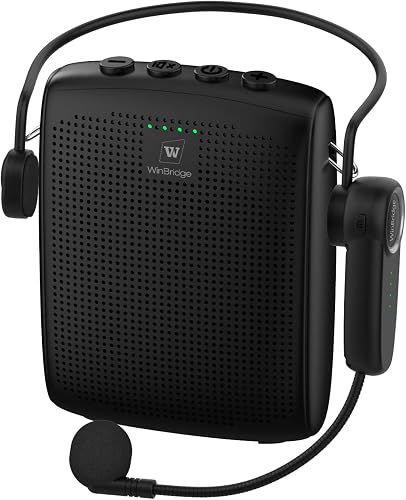
WinBridge Voice Amplifier with Bluetooth: Best for amplifying a speaker to a group
WinBridge Voice Amplifier with Bluetooth: Best for amplifying a speaker to a group
- 15 W voice amplifier
- Bluetooth headset microphone
- Speaker can be clipped or worn with strap
- Bluetooth audio playback
WinBridge is a voice amplifier for the person speaking to a group. Its Bluetooth headset microphone works with the speaker system, but this is not a remote microphone designed to feed a listener's hearing aids.
Pros
- Portable speaker with headset mic
- Bluetooth connectivity
- Clip and neck-strap options
Cons
- Designed to project a speaker's voice to a group
- Not a hearing aid accessory
WinBridge combines a 15 W portable speaker with a Bluetooth headset microphone. The speaker can be clipped to a belt or worn with a neck strap, while the microphone is for the person addressing a group.
That makes it a voice projection tool for classrooms and presentations. The microphone pairs with the amplifier, not with a listener's hearing aids as a remote microphone.
Choose it when a speaker needs their voice carried to a group. For listening support at a service, compare the setup with our church amplifier guide before deciding which kind of device fits the room.
Ceretone Horizon OTC Hearing Aids for Seniors: Best for an OTC hearing aid with dual mics
Ceretone Horizon OTC Hearing Aids for Seniors: Best for an OTC hearing aid with dual mics
- Dual microphones
- Four listening programs
- Six volume levels
- Rechargeable case
Ceretone Horizon is an OTC hearing aid with dual microphones, but it has no Bluetooth. Consider it for built-in mic features rather than as a Bluetooth microphone system or accessory.
Pros
- Dual microphones
- Four listening programs
- Rechargeable case
Cons
- No Bluetooth
- Does not provide a separate remote microphone
Ceretone Horizon is an OTC hearing aid with dual microphones, four programs, and six volume levels. It has no Bluetooth, so it is not a Bluetooth microphone accessory.
The four programs are Indoor, Outdoor, Music, and Restaurant. The system includes a rechargeable case and four eartip sizes.
This may suit someone considering an OTC hearing aid with built-in microphones. If your goal is a microphone worn by another person, choose a system with a compatible remote microphone instead.
Trihear Convo Hearing Amplifier for Seniors: Best for conversation and TV switching
Trihear Convo Hearing Amplifier for Seniors: Best for conversation and TV switching
- Remote and local microphone modes
- Remote microphone range up to 98 ft
- TV sound and conversation use
- Independent left and right volume control
Trihear Convo combines a remote microphone with a pocket amplifier and lets you switch between remote and local mic modes. Its stated TV and conversation uses may suit someone who wants one device for both.
Pros
- Remote and local microphone modes
- Independent left and right volume
- Rechargeable
Cons
- Uses a separate amplifier and listening accessories
- Not described as a direct Bluetooth hearing aid microphone
Trihear Convo provides remote and local microphone modes in a pocket amplifier. Its remote microphone is described for use up to 98 ft away, and the system supports TV listening through a cable.
Independent left and right volume controls and tone adjustment let you change the sound at the amplifier. The set includes wired headphones and earphones.
Choose it if you want one separate system for conversation and TV audio. For a different wireless listening method, compare it with Best Fm Listening System For Hearing Loss.
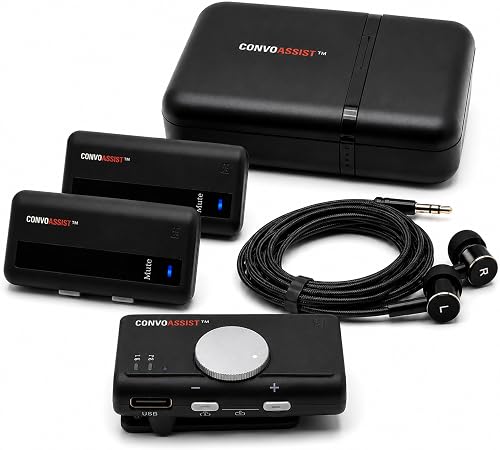
ConvoAssist™ Personal Sound Amplifier: Best for following two speakers
ConvoAssist™ Personal Sound Amplifier: Best for following two speakers
- Two wireless microphones
- Microphones can be clipped to speakers
- Works with headphones
- Charging case with additional recharges
Two microphones can send the voices of two speakers to headphones, making this a fit for small conversations. It is a separate personal listening system, rather than a microphone specified to stream directly to hearing aids.
Pros
- Two microphones for two speakers
- Works with in-ear or over-ear headphones
- Charging case
Cons
- Up to 8 hours of listening per charge
- Requires headphones or included earbuds
ConvoAssist includes two wireless microphones that can clip onto speakers and send their voices to a receiver. It works with in-ear or over-ear headphones and includes wired earbuds; each microphone has a mute button.
This arrangement may help when two people are speaking and you want to listen through headphones. The listening time is up to 8 hours per charge, with additional recharges from the case.
ConvoAssist does not specify direct hearing aid pairing. Consider it a separate personal sound system, and confirm the receiver and headphone setup will work for your needs before choosing it.
ResponseBridge Voice Amplifier Wireless Microphone Headset B002: Best for portable speaking and presentations
ResponseBridge Voice Amplifier Wireless Microphone Headset B002: Best for portable speaking and presentations
- 15 W portable voice amplifier
- Wireless microphone headset
- Bluetooth speaker function
- Belt clip and strap
ResponseBridge B002 is built to amplify a speaker's voice through a portable speaker. Its Bluetooth feature is for speaker playback, so check another category if you need a microphone that streams into hearing aids.
Pros
- Portable speaker with wireless headset mic
- Bluetooth and USB audio input
- Wearable or tabletop use
Cons
- Made for voice projection
- Not specified to connect with hearing aids
ResponseBridge B002 is a 15 W portable voice amplifier with a wireless headset microphone. Its speaker can be worn with a belt or strap, and the unit supports Bluetooth and USB audio input.
The microphone sends the wearer's voice to the amplifier. It is not described as a hearing aid microphone or a remote listening accessory for another person's hearing aids.
Choose it if you need a portable speaker for teaching, tours, or presentations. If you are shopping for personal listening, focus on a system that specifies the receiver or hearing aid connection you need.
What should you check before buying a Bluetooth microphone for hearing aids?
Check your exact hearing aid model and the connection method before buying a microphone. For computer pairing help, see how to connect hearing aids to a laptop.
Some hearing aids use a compatible remote microphone directly, while others need a brand-specific streamer or another accessory.
Ask the hearing aid maker or audiologist these questions:
- Is this microphone compatible with my exact hearing aid model?
- Does it connect directly, or does it require a streamer?
- Does the speaker wear or clip on the microphone?
- Does sound go to both hearing aids or only one?
- Can I use it while streaming TV or phone audio?
- How far away can the microphone be placed in the setting I care about?
Do not assume that Bluetooth in a product name means it can pair with hearing aids. If you prefer a model without wireless features, compare hearing aids without Bluetooth.
In voice amplifiers, Bluetooth may describe music playback or a microphone link to the speaker.
Which microphone setup suits your listening needs?
A direct hearing aid accessory is the most relevant choice when you want another person's speech sent into hearing aids you already own. Confirm model compatibility and whether a streamer is needed before buying.
A separate receiver and headphone system can work when you are comfortable listening through its own earbuds or headphones. For ear-worn Bluetooth options, see Bluetooth hearing aid earbuds.
Neosonic, ConvoAssist, and Trihear use their own listening hardware rather than describing direct hearing aid pairing.
A voice amplifier is for the person speaking to a group, not for a listener trying to receive speech in their hearing aids. WinBridge and ResponseBridge fit that use, while Ceretone Horizon is an OTC hearing aid with built-in microphones and no Bluetooth.
Are Bluetooth microphones and remote microphones the same?
No. A Bluetooth microphone may send audio over Bluetooth, but a remote microphone for hearing aids is a specific accessory designed to work with compatible hearing aids, sometimes through a brand's streamer.
Check the complete connection chain: microphone, hearing aid or streamer, and the specific hearing aid model. A system that sends audio to its own receiver or speaker may help you hear speech without being a hearing aid accessory.
Which Bluetooth microphone setup should you choose?
Choose a hearing aid maker-approved remote microphone if you want speech to reach your current hearing aids. Choose a separate receiver system if headphones or earbuds are fine, and choose a voice amplifier when the speaker needs to reach a group.
Among these picks, Neosonic and Trihear provide remote microphones for their own amplifiers, while ConvoAssist includes two microphones for a headphone receiver. Confirm compatibility with your hearing aids before choosing any device for direct Bluetooth listening.
Our top 3 picks at a glance
-
1
Best for conversation across a room
Neosonic [Upgraded] Rechargeable Hearing Aid Amplifier
9.7/10 our score
See it on Amazon -
2
Best for simple local listening
IROGER Hearing Amplifier for Seniors
9.5/10 our score
See it on Amazon -
3
Best for amplifying a speaker to a group
WinBridge Voice Amplifier with Bluetooth
9.6/10 our score
See it on Amazon