What Is the T-coil Setting on a Hearing Aid?
On this page (7 sections)
The T-coil setting on a hearing aid is a special feature designed to streamline your listening experience in places with loop systems. It works by picking up sound directly from the loop, bypassing unwanted background noise. Think of it as a direct audio connection for clearer conversations.
Many public spaces like theaters and churches use these loop systems to help people with hearing aids. When your hearing aid is set to T-coil mode, it tunes into this system. This means you get a much clearer, more focused sound, making it easier to understand speech even in noisy environments.
- The T-coil setting is a hearing aid feature.
- It uses loop systems for clearer sound.
- It helps bypass background noise.
- Found in places like theaters and churches.
- Offers a more focused listening experience.
Let’s break down exactly what the T-coil setting is and how it can help you hear better in common listening situations.
Understanding Your Hearing Aid’s T-Coil Setting
So, you’ve heard about the T-coil setting on your hearing aid, but you’re wondering what it actually does. It’s a fantastic feature that can make a big difference in how you hear in certain places. Simply put, the T-coil setting allows your hearing aid to pick up sound signals directly from a special type of audio system. This is often called a “hearing loop” or “induction loop.”
Instead of your hearing aid’s microphone picking up sound from the air, which can include lots of background noise, the T-coil connects to the loop system. Think of it like a tiny radio receiver inside your hearing aid. It tunes into the magnetic signal broadcast by the loop. This bypasses ambient sounds, giving you a much clearer and more focused listening experience.
How Does the T-Coil Actually Work?
It all comes down to electromagnetism. Hearing loop systems use a wire, often installed around the perimeter of a room, like a stage or a seating area. This wire carries an audio signal. When an electrical current flows through this wire, it creates a magnetic field.
Your hearing aid has a small T-coil, which is essentially a tiny coil of wire wrapped around a core. This T-coil is designed to detect that specific magnetic field. When you switch your hearing aid to the T-coil mode, it stops using its microphones and starts listening to the magnetic signal from the loop. This direct connection is what cuts out distracting background noise.
The Science Behind the Sound
The signal from the loop is converted into sound by your hearing aid. This process is very efficient. It means the sound you hear is a pure audio feed, without the fuzziness or interference that can come from a noisy environment. It’s like having a private audio channel directly to your ears.
Where Will You Find Hearing Loops?
You might be surprised at how many places use hearing loop technology. These systems are becoming more common because they offer such a clear benefit for individuals with hearing loss. You’ll often find them in:
- Churches and Houses of Worship: Hear the sermon or hymns without straining.
- Theaters and Concert Halls: Enjoy plays, musicals, and musical performances with crisp dialogue and music.
- Auditoriums and Lecture Halls: Catch every word during presentations or speeches.
- Public Transportation Hubs: Understand announcements at airports, train stations, and bus terminals.
- Movie Theaters: Experience films with clear dialogue.
- Museums: Listen to exhibit information without distractions.
- Some Restaurants and Cafes: Enjoy conversations more easily.
Look for a small symbol that looks like an ear with sound waves coming from it, often with a “T” in the middle. This is the international symbol for hearing loop systems.
Benefits of Using the T-Coil Setting
The advantages of using the T-coil setting are numerous. The most immediate benefit is significantly improved speech clarity. When you’re in a place with a hearing loop and your hearing aid is in T-coil mode, you’re essentially cutting out all the ambient noise. This means you can focus entirely on the sound source.
Bypassing Background Noise
Imagine you’re at a busy restaurant. Even with powerful hearing aids, the clatter of dishes, conversations from other tables, and general background hum can make it incredibly difficult to follow the person you’re talking to. The T-coil bypasses all of that. It’s like turning down the volume on the world and turning up the volume on your conversation.
Direct Sound Transmission
This direct audio transmission is a game-changer for many. It means the sound signal is delivered to your hearing aid without being degraded by distance or environmental noise. Research suggests that assistive listening devices, including T-coils, can improve speech understanding by up to 30% in noisy situations (National Institute on Deafness and Other Communication Disorders).
Less Listening Effort
When you have to work hard to understand speech, it can be exhausting. This is often referred to as “listening fatigue.” By reducing the effort required to hear clearly, the T-coil setting can help reduce mental fatigue. You’ll likely find yourself feeling less tired after social gatherings or events where you’ve used the T-coil.
How to Activate and Use Your T-Coil Setting
Activating the T-coil setting is usually quite straightforward, but it can vary slightly depending on your hearing aid model and manufacturer. Your audiologist is your best resource for specific instructions, but here’s a general idea of how it works.
Switching Modes on Your Hearing Aid
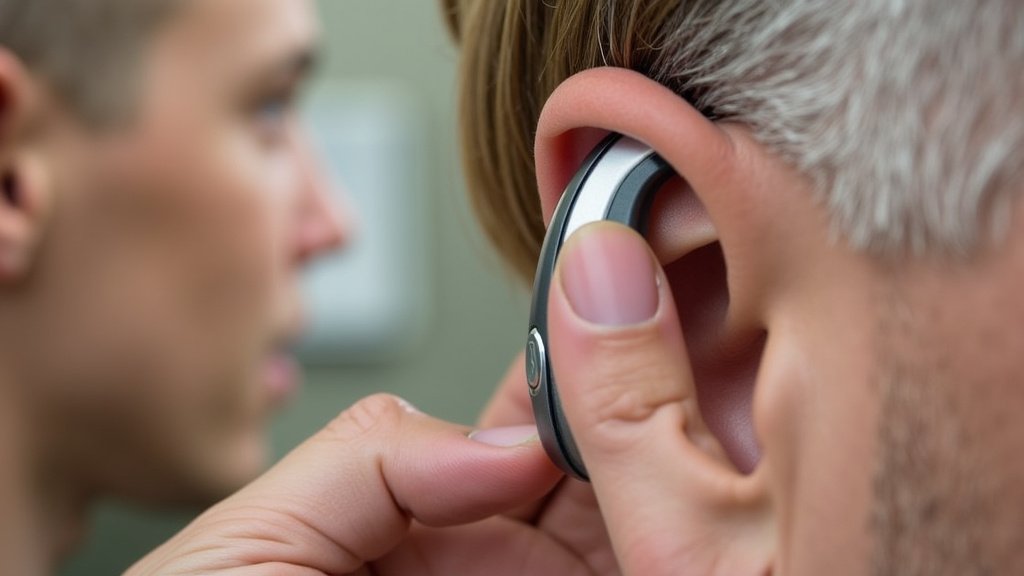
Many modern hearing aids offer multiple listening programs or modes. You might have a program for general listening, a program for noisy environments, and a program that includes the T-coil. You can typically switch between these programs using:
- A button on the hearing aid itself.
- A remote control that comes with your hearing aids.
- A smartphone app that pairs with your hearing aids.
Your audiologist will help you set up these programs. They can often assign the T-coil function to a specific program or even a combination program (like T-coil and microphone active simultaneously).
The “MT” or “Telecoil + Microphone” Setting
Sometimes, your hearing aid might have a setting called “MT” or “Telecoil + Microphone.” This is a very useful setting because it allows your hearing aid to pick up sound from the loop system and still use its microphones. This means you can hear the looped audio clearly while also being able to hear someone speaking directly to you or sounds from your immediate surroundings. It offers a good balance in many situations.
What to Do When You Arrive at a Looped Venue
Once you know you’re going to a venue with a hearing loop, follow these simple steps:
- Locate the hearing loop symbol. This will tell you that a loop system is available.
- Ask venue staff if needed. They can often confirm the presence of a loop system and sometimes even where the best seating is for picking up the signal.
- Switch your hearing aid to the T-coil program. Use your hearing aid’s button, remote, or app to select the correct program.
- Adjust volume as needed. You may need to adjust the volume using your hearing aid controls or remote.
- Enjoy the sound! You should notice a marked improvement in clarity.
Don’t be afraid to ask for help! Audiologists and hearing aid manufacturers are committed to helping you get the most out of your devices.
Troubleshooting Common T-Coil Issues
While the T-coil setting is incredibly beneficial, you might occasionally run into a few snags. Here are some common issues and how you can address them.
No Sound or Weak Sound
If you’re not hearing anything, or the sound is very faint, there are a few possibilities:
- Is the T-coil program actually selected? Double-check that you’ve switched to the correct program on your hearing aid.
- Is the volume set correctly? Try increasing the volume.
- Is the loop system working? The venue’s system might be experiencing an issue. Politely ask a staff member if the loop is functioning.
- Are you in the right spot? The magnetic field can be strongest in certain areas. Try moving slightly forward or backward in your seat.
- Is your T-coil compatible? While most modern hearing aids have T-coils, older models might not. Your audiologist can confirm this.
Interference or Static
Sometimes, you might hear static or buzzing. This can be caused by:
- Other electronic devices. Large screens or certain electrical equipment can sometimes interfere with the magnetic signal.
- Distance from the loop wire. If you’re too far away, the signal might be weaker and more susceptible to interference.
- Issues with the loop system itself. Again, asking venue staff is helpful.
When to Consult Your Audiologist
If you consistently experience problems, or if your hearing aid isn’t functioning as expected in looped environments, it’s time to schedule an appointment with your audiologist. They can:
- Check your hearing aid settings.
- Verify your T-coil is functioning correctly.
- Advise on the best listening programs for your needs.
- Help you troubleshoot venue-specific issues.
Many hearing aid manufacturers provide specific guidance on their T-coil functionality, and your audiologist will have access to this information.
T-Coil vs. Other Hearing Technologies
It’s helpful to understand how the T-coil fits into the broader picture of hearing assistance technologies. While the T-coil is excellent for looped environments, other technologies serve different purposes.
Bluetooth and Direct Streaming
Many newer hearing aids offer Bluetooth connectivity. This allows direct streaming of audio from smartphones, TVs, and other Bluetooth-enabled devices. This is fantastic for personal listening devices but doesn’t directly help in public looped venues. Think of Bluetooth as a direct line from your device to your hearing aid, while T-coil is a direct line from a venue’s system to your hearing aid.
FM and Infrared Systems
You may also encounter FM (Frequency Modulated) and infrared (IR) listening systems. These systems typically involve a transmitter worn by the speaker and a receiver worn by the listener. Unlike T-coils, they transmit sound via radio waves or infrared light, respectively. They are also effective at reducing background noise, but they require a separate receiver unit, whereas the T-coil uses a built-in component of your hearing aid.
The Role of the T-Coil Today
The T-coil remains a vital technology, especially since many public venues have already invested in loop systems. It’s a reliable and often invisible way to improve your hearing experience in specific, common locations. It’s a foundational technology that complements newer wireless options.
Here’s a quick checklist to remember about your T-coil:
- Check for the hearing loop symbol (ear with waves).
- Know how to switch your hearing aid to T-coil mode.
- Test the sound in a looped environment.
- Adjust volume as needed.
- If problems arise, ask venue staff or your audiologist.
- Consider the “MT” setting for balanced hearing.
Conclusion
You’ve learned that your hearing aid’s T-coil setting is a powerful tool for clearer listening in public spaces equipped with hearing loops. By directly connecting to sound systems in places like theaters and houses of worship, the T-coil bypasses distracting background noise. This direct audio stream reduces listening effort and improves speech understanding. Don’t hesitate to activate this feature when you see the hearing loop symbol. Your audiologist is always your best resource for ensuring you’re using your T-coil to its fullest potential. Take the step today to experience more focused and enjoyable sound.
Frequently Asked Questions
How do I know if a place has a hearing loop system?
Look for the international hearing loop symbol. It typically looks like an ear with sound waves coming from it, often with a “T” in the center. Venue staff can also often confirm if they have a hearing loop system available.
Can I use my T-coil setting in a quiet room with one person talking?
The T-coil setting is most effective in locations with a dedicated hearing loop system. In quiet, one-on-one conversations, your hearing aid’s regular microphone settings are usually best, as they capture sound from all around you naturally.
What’s the difference between T-coil and Bluetooth for hearing aids?
Bluetooth allows direct streaming from personal devices like phones or TVs to your hearing aid. The T-coil connects your hearing aid directly to a public venue’s loop system, bypassing environmental noise for clearer sound in those specific locations.
Is the T-coil setting always available on hearing aids?
Most modern hearing aids are equipped with T-coils. However, older or more basic models might not have this feature. Your audiologist can confirm if your specific hearing aids have T-coil functionality.
What if the sound is still unclear when I use the T-coil setting?
If you’re experiencing unclear sound, first check that the T-coil program is selected and the volume is adjusted correctly. You might also need to try moving slightly within your seating area, as the signal strength can vary. If problems persist, consult the venue staff or your audiologist.