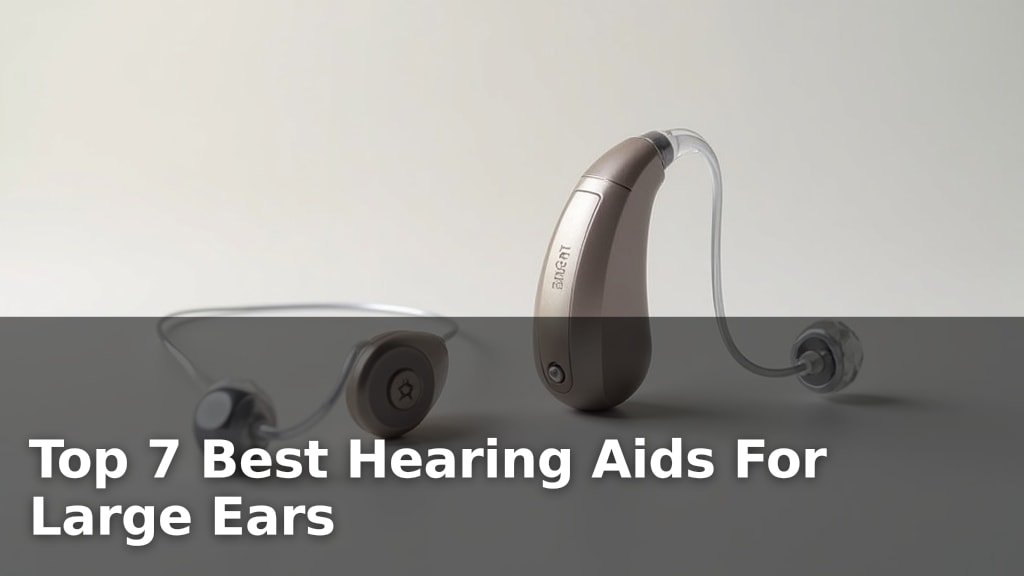
Is It Worth Buying Rechargeable Hearing Aids?
On this page (3 sections)
Yes, rechargeable hearing aids are often worth buying for many people, offering a lot of convenience. We found that they can provide a more hassle-free daily experience compared to traditional battery models.
You might find them beneficial if you’re tired of frequently changing tiny batteries. They offer environmental benefits by reducing battery waste and can be quite cost-effective over time. Many users enjoy the simplicity of just charging them overnight.
- Rechargeable aids offer convenience.
- They can save you money on batteries.
- Charging overnight is easy.
- Good for the environment.
Let’s dive into the details and help you decide if rechargeable hearing aids are the right choice for your lifestyle.
Are Rechargeable Hearing Aids a Smart Investment?
Yes, for most people, rechargeable hearing aids are a smart investment due to their convenience, long-term savings, and environmental benefits. They simplify your daily routine.
The Convenience Factor: Living Life Wirelessly
Imagine never fumbling with tiny batteries again. That’s a major perk of rechargeable hearing aids. You simply place them in their charging case at night, just like your phone or earbuds. We found that this daily charging routine simplifies your life significantly.
No more emergency trips to the store for replacement batteries. This convenience is especially helpful for those with dexterity issues. Small batteries can be quite tricky to handle and insert correctly (National Institute on Deafness and Other Communication Disorders).
Many users report a feeling of freedom and peace of mind. You wake up with fully charged devices, ready to go. This reliable power source means less worry throughout your day.
Cost Savings Over Time: Beyond the Initial Price Tag
While the upfront cost of rechargeable hearing aids might seem higher, consider the long-term savings. If you are comparing lower-cost options, see whether cheap hearing aids are worth it for your needs. You won’t be buying disposable batteries every few days or weeks. Over several years, this adds up significantly.
Let’s look at a quick comparison. Disposable batteries can cost hundreds of dollars annually, depending on the type and your usage. Rechargeable models eliminate this recurring expense. We found that this can lead to substantial savings in the long run.
Think of it like buying an electric car versus a gas car. The initial cost might be more, but you save money on fuel over time. Rechargeable hearing aids offer a similar financial benefit for your hearing health.
Comparing Battery Costs
To give you a clearer picture, here’s a simplified breakdown. This table shows potential savings over a five-year period.
| Feature | Disposable Batteries | Rechargeable System |
|---|---|---|
| Annual Battery Cost (approx.) | $100 – $200 | $0 (after initial purchase) |
| 5-Year Total Battery Cost | $500 – $1,000 |
 ConclusionYou’ve seen how rechargeable hearing aids offer a compelling blend of convenience, long-term savings, and environmental responsibility. For many, they simplify daily life by eliminating the hassle of tiny batteries and offering peace of mind with a reliable charge. We found that while the initial cost might be higher, the savings on disposable batteries can make them a smart financial choice over time. If you’re looking for an easier, greener way to manage your hearing health, a rechargeable model is likely a great fit for you. Consider your daily routine and budget, then talk to your audiologist to explore the best rechargeable options for your needs. If you are deciding where to shop, compare online and in-person buying. Frequently Asked QuestionsAre all hearing aids available in rechargeable versions?No, not all hearing aid styles or models come with rechargeable options. While many popular styles like Receiver-In-Canal (RIC) and Behind-The-Ear (BTE) do, smaller In-The-Canal (ITC) or Completely-In-Canal (CIC) models might still rely on disposable batteries due to their size. It’s always best to discuss available rechargeable options with your hearing care professional. How long do rechargeable hearing aid batteries typically last on a single charge?Most modern rechargeable hearing aids provide a full day’s use, typically 18 to 24 hours, on a single charge. This often includes streaming audio or phone calls. Your actual usage time can vary based on how much you stream and the specific features you use. What if I forget to charge my rechargeable hearing aids overnight?Many rechargeable hearing aids offer a quick-charge feature that can provide several hours of use from just a short charge. For example, a 30-minute charge might give you 5-6 hours of power. Some models also come with portable charging cases that hold extra charges, acting like a power bank for your devices. Do rechargeable hearing aids have a shorter lifespan than traditional ones?The rechargeable batteries themselves typically last for several years, often throughout the lifespan of the hearing aid unit (around 4-5 years). The internal battery can usually be replaced by a professional when needed. The overall lifespan of the hearing aid isn’t necessarily shorter than a disposable battery model; it depends more on the device’s quality and care. Are rechargeable hearing aids more expensive than disposable battery models?The upfront cost of rechargeable hearing aids can be higher than models using disposable batteries. However, you eliminate the ongoing expense of buying replacement batteries. Over the typical 4-5 year lifespan of a hearing aid, many users find that the total cost of ownership for rechargeable models ends up being similar or even lower due to these long-term savings. Related guides |